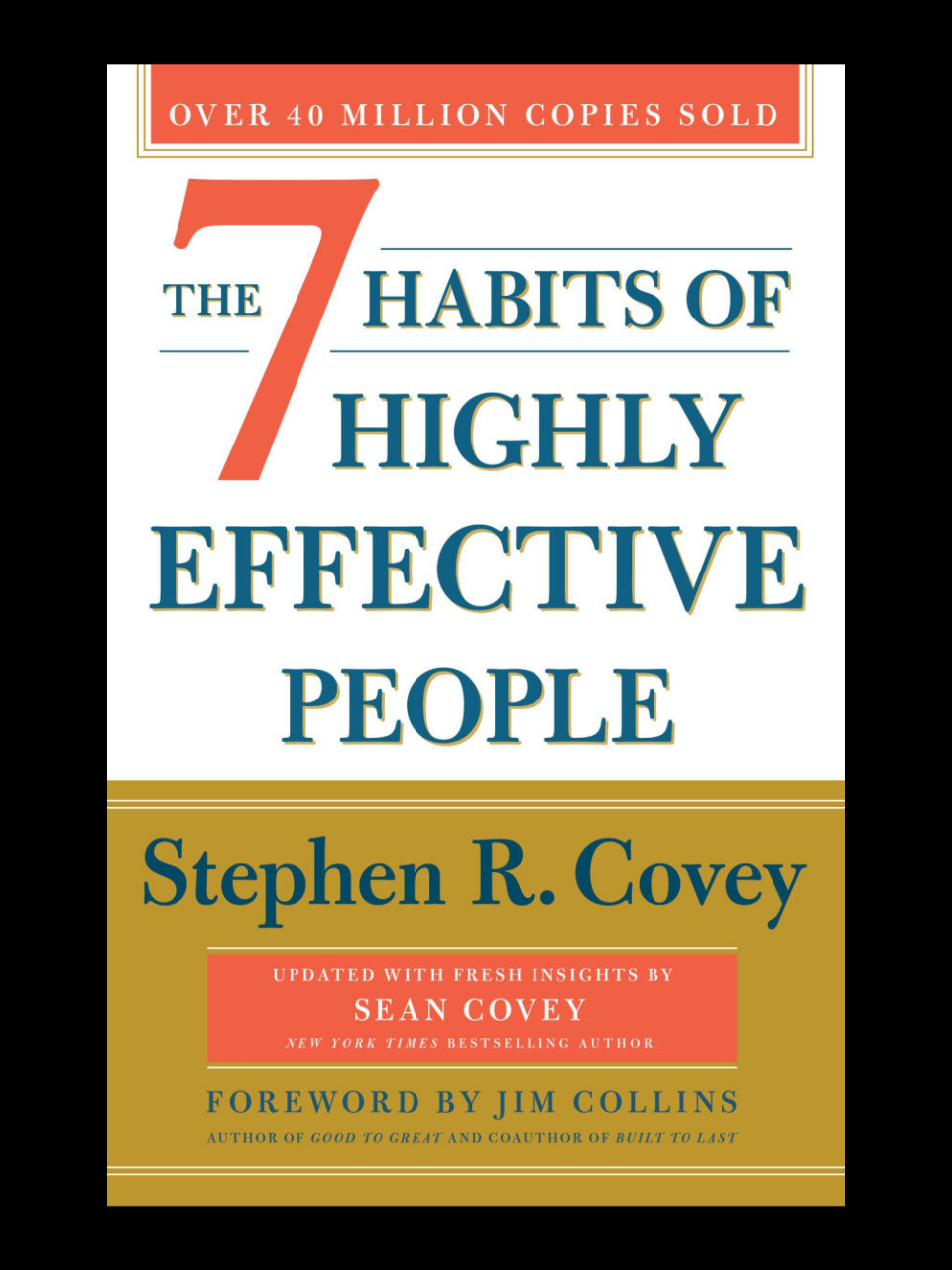
The 7 Habits Of Highly Effective People By Stephen R. Covey
VAT exclusive · Delivery calculated at checkout
Transform Your Life with The 7 Habits of Highly Effective People by Stephen R. Covey
The 7 Habits of Highly Effective People by Stephen R. Covey is far more than a conventional self-help book; it is a complete framework for achieving personal and professional effectiveness, rooted in timeless principles of integrity, responsibility, and long-term thinking. Since its publication in 1989, this beloved classic has sold over 40 million copies worldwide and has been translated into dozens of languages, making it one of the most influential books of the modern era.
The fundamental idea at the heart of The 7 Habits of Highly Effective People by Stephen R. Covey is simple yet profound: lasting success emerges not from quick-fix personality tricks, but from developing deep character ethics—principles such as integrity, honesty, fairness, courage, and human dignity. Covey argues that true effectiveness requires change from the inside out, not the outside in.
For ambitious Cameroonians navigating the competitive landscapes of Douala, Yaoundé, Buea, Bamenda, and Limbe, the wisdom Stephen R. Covey shares in The 7 Habits of Highly Effective People by Stephen R. Covey will fundamentally transform how you approach your work, your relationships, and your entire life.
About the Author Stephen R. Covey: Why His Wisdom Matters in The 7 Habits of Highly Effective People by Stephen R. Covey
Readers of The 7 Habits of Highly Effective People by Stephen R. Covey benefit from the insights of one of the most respected leadership authorities of all time. Stephen R. Covey (1932-2012) was an American educator, author, and businessman who dedicated his life to helping people understand the principles of effectiveness. He holds an MBA from Harvard and a doctorate from Brigham Young University, where he served as a professor of organizational behavior.
Covey’s influence extended far beyond his books. In 1994, U.S. President Bill Clinton invited Covey to Camp David to counsel him on integrating the book’s ideas into his presidency. In 2011, Time magazine listed The 7 Habits of Highly Effective People by Stephen R. Covey as one of “The 25 Most Influential Business Management Books.” When you read this book, you are learning from a man whose wisdom has shaped leaders at the highest levels of business and government.
The Framework of The 7 Habits of Highly Effective People by Stephen R. Covey
The 7 Habits of Highly Effective People by Stephen R. Covey is organized around seven distinct habits that build progressively upon one another. The first three habits focus on achieving personal mastery—moving from dependence to independence. The next three habits focus on collaboration and synergy—moving from independence to interdependence. The seventh habit focuses on self-renewal and continuous improvement.
Habit 1: Be Proactive®
The first habit in The 7 Habits of Highly Effective People by Stephen R. Covey centers on taking responsibility for your life. Stephen R. Covey teaches that between stimulus and response, human beings possess the freedom to choose. Proactive people direct their time and energy toward their Circle of Influence—the things they can actually do something about—rather than their Circle of Concern—the things they cannot affect, such as the weather or the economy.
For the entrepreneur in Douala, being proactive means recognizing that while external factors like market conditions may present challenges, your response to those conditions remains entirely within your control. As Covey famously wrote, “We are the programmers” of our own lives.
Habit 2: Begin with the End in Mind®
The second habit in The 7 Habits of Highly Effective People by Stephen R. Covey draws upon the power of imagination. Stephen R. Covey explains that all things are created twice: first mentally, then physically. Before constructing a house, you create detailed plans. Before delivering a presentation, you envision it. The same principle applies to your entire life.
Covey encourages readers to create a Personal Mission Statement—a blueprint that conveys your character, your values, and your goals. This mission statement serves as the constitution by which you make daily decisions. As one reader noted, if you are feeling lost, unmoored, or disconnected, this habit alone can help you rediscover your center.
Habit 3: Put First Things First®
The third habit in The 7 Habits of Highly Effective People by Stephen R. Covey addresses personal management. Stephen R. Covey introduces a powerful time management matrix that categorizes tasks into four quadrants based on urgency and importance:
-
Quadrant I: Urgent and Important — Crises, deadlines, pressing problems (address these first)
-
Quadrant II: Not Urgent but Important — Long-term planning, relationship building, personal development (plan and prioritize these)
-
Quadrant III: Urgent but Not Important — Interruptions, some calls, some correspondence (delegate these)
-
Quadrant IV: Not Urgent and Not Important — Time wasters, trivia, excessive entertainment (eliminate these)
The key insight from The 7 Habits of Highly Effective People by Stephen R. Covey is that truly effective people spend most of their time in Quadrant II, even though Quadrant I often demands immediate attention. By focusing on what is important but not yet urgent, you prevent crises from arising in the first place.
Habit 4: Think Win-Win®
The fourth habit in The 7 Habits of Highly Effective People by Stephen R. Covey shifts the focus from personal mastery to interdependence. Stephen R. Covey introduces the concept of the “abundance mentality”—the belief that there is more than enough success to go around. People with a scarcity mentality view life as a zero-sum game: for me to win, you must lose. People with an abundance mentality actively seek mutually beneficial solutions.
Covey introduces the powerful metaphor of the “emotional bank account”—the reserve of trust that accumulates in a relationship through consistent acts of kindness, honesty, and respect. Every positive interaction makes a deposit; every negative interaction makes a withdrawal. When the account balance is high, communication flows easily,y and problems are resolved quickly.
Habit 5: Seek First to Understand, Then to Be Understood®
The fifth habit in The 7 Habits of Highly Effective People by Stephen R. Covey addresses perhaps the most essential communication skill. Stephen R. Covey observes that most people do not listen with the intent to understand; they listen with the intent to reply. They project their own experiences onto others and prescribe solutions that do not truly fit.
Covey teaches the skill of empathetic listening—listening not merely to words, but to feelings and meaning. This requires entering another person’s frame of reference, understanding them intellectually and emotionally. Only when people feel genuinely understood do they become open to being influenced by you.
The habit draws upon ancient Greek philosophy’s three modes of persuasion: Ethos (personal credibility), Pathos (empathy), and Logos (logic and reasoning). The order matters: without ethos and pathos, logos alone rarely persuades.
Habit 6: Synergize®
The sixth habit in The 7 Habits of Highly Effective People by Stephen R. Covey explores creative cooperation. Synergy means that the whole is greater than the sum of its parts—one plus one can equal three or more. When people work together with mutual understanding (Habit 5) and a win-win attitude (Habit 4), they generate solutions that neither could have achieved alone.
Synergy requires openness to new possibilities and genuine respect for differences. As Stephen R. Covey explains, valuing the mental, emotional, and psychological differences among people is what creates truly breakthrough solutions.
Habit 7: Sharpen the Saw®
The seventh habit in The 7 Habits of Highly Effective People by Stephen R. Covey focuses on self-renewal. Stephen R. Covey uses the analogy of a lumberjack sawing down a tree. If he continues sawing without pausing to sharpen his blade, eventually the tool becomes so dull that he can no longer cut down any trees. The most effective action he could take would be to stop sawing and sharpen his saw—even though it feels counterproductive in the moment.
Sharpen the Saw means regularly renewing yourself in four key dimensions:
-
Physical — Exercise, nutrition, rest (care for your body)
-
Social/Emotional — Relationships, service, empathy (connect with others)
-
Mental — Reading, learning, writing (expand your mind)
-
Spiritual — Meditation, prayer, reflection on values (clarify your purpose)
By investing in these four areas, you build the capacity to sustain all the other habits. As Covey states, this is the habit that makes all the others possible.
The Maturity Continuum in The 7 Habits of Highly Effective People by Stephen R. Covey
A powerful framework within The 7 Habits of Highly Effective People by Stephen R. Covey is the maturity continuum. Stephen R. Covey explains that human growth follows a natural progression:
-
Dependence — The “you” paradigm: You take care of me; I blame you for my problems.
-
Independence — The “I” paradigm: I can do it; I am responsible; I choose.
-
Interdependence — The “we” paradigm: We can do it together; we can cooperate; we can create something greater than any of us alone.
Habits 1, 2, and 3 are the habits of independence—they move you from dependence to independence. Habits 4, 5, and 6 are the habits of interdependence—they move you from independence to interdependence. Habit 7 is the habit of renewal—it sustains all the others.
What Makes The 7 Habits of Highly Effective People by Stephen R. Covey Unique
The 7 Habits of Highly Effective People by Stephen R. Covey distinguishes itself from other self-help books in several significant ways:
It Focuses on Character, Not Personality
Covey identified a crucial shift in self-help literature after World War I. Before the war, successful literature emphasized “character ethics”—timeless principles like integrity, humility, and courage. After the war, the focus shifted to “personality ethics”—quick-fix techniques, positive thinking, and manipulation tactics. Covey argues that personality ethics function like bandages; they may temporarily cover a wound, but they do not heal the underlying injury. Lasting change requires character transformation.
It Is Based on Universal Principles
The habits are not Covey’s inventions; they are distillations of principles that have been recognized across cultures for thousands of years. As one reader observed, the wisdom in this book has existed for millennia because such is the nature of immutable truth. Covey simply organized these principles into an accessible framework.
It Works for Everyone
From corporate executives to students, from parents to presidents, the principles in The 7 Habits of Highly Effective People by Stephen R. Covey apply universally. One reader shared: “I would recommend this book for anyone in their teen years and up. If you are feeling lost in life, unmoored, disconnected, depressed—read this book. Read it slowly, reread the page you just read, let it permeate, and find your center.”
What Readers Are Saying About The 7 Habits of Highly Effective People by Stephen R. Covey
The 7 Habits of Highly Effective People by Stephen R. Covey has received passionate responses from readers worldwide, with tens of thousands of reviews praising its transformative impact.
One reader reflects: “This is one of the greatest books I have ever read, offering simple practices to follow. The straightforward language, excellent flow, depth, and ease of relating and internalizing are its highlights. I have been reading it again and again for the last twenty-five years, whenever I need to sharpen my saw and return to basics. Humanity is profoundly indebted to the great Stephen.”
Another reader notes: “I have just completed the most popular and widely recognized self-help book ever written. Its impact and cultural relevance are undeniable; even non-readers acknowledge it at a glance of its cover.”
A reader shares a personal transformation story: “While reading this book, I could hardly wait for each week to pass because every habit filled me with energy and curiosity for the habits to come. Several positive changes occurred in my life after I began applying these principles. I reconciled with former adversaries. I gained new friends. I began approaching my relationships with greater maturity. I started taking my academics seriously.”
Some readers offer balanced perspectives. One reviewer acknowledges that while the content is excellent, the writing style can occasionally feel dry or verbose. Another suggests that the book could benefit from more concise explanations. However, even critics concede that “the principles are highly practical; you may begin applying them from day one.”
Why The 7 Habits of Highly Effective People by Stephen R. Covey Matters for Cameroonians
The 7 Habits of Highly Effective People by Stephen R. Covey arrives at a crucial moment for Cameroon’s professional, entrepreneurial, and personal development communities. In our rapidly developing economy, the need for character-based leadership and personal effectiveness has never been greater.
Whether you are:
-
An entrepreneur in Douala is building a business and balancing urgent demands with important long-term planning
-
A corporate professional in Yaoundé navigating complex workplace relationships and seeking to build trust
-
A student in Buea, preparing to enter the workforce and wanting to establish a foundation for lifelong success
-
A parent in Bamenda raising children and modeling principles of integrity and responsibility
-
A community leader in Limbe striving to unite diverse groups toward common goals
-
Anyone who has ever sensed that quick fixes do not work and lasting change requires deeper effort
The 7 Habits of Highly Effective People by Stephen R. Covey provides the framework you need to progress from dependence to independence to interdependence—and to sustain that growth throughout your life.
Practical Takeaways from The 7 Habits of Highly Effective People by Stephen R. Covey
From the pages of The 7 Habits of Highly Effective People by Stephen R. Covey, here are actionable strategies you can begin implementing immediately:
-
Create a personal mission statement. Take time to reflect on what genuinely matters to you. What do you wish to be remembered for? Let this guide your daily decisions.
-
Use the time management matrix. This week, track how you spend your time. Which quadrant receives most of your attention? Make a conscious effort to invest more time in Quadrant II activities.
-
Practice empathetic listening. In your next conversation, focus entirely on understanding the other person before attempting to make your own point. Notice the difference this creates.
-
Identify your circle of influence. When confronting a challenge, distinguish between what you can control and what you cannot. Direct your energy where it can actually make a difference.
-
Make regular deposits in emotional bank accounts. Reach out to someone you care about with no agenda other than strengthening your connection.
-
Schedule renewal time. Block out time each week for physical exercise, mental stimulation, meaningful connection, and spiritual reflection.
A Note on Editions of The 7 Habits of Highly Effective People by Stephen R. Covey
The 7 Habits of Highly Effective People by Stephen R. Covey is available in a 30th Anniversary Edition, published in May 2020 by Simon & Schuster. This special edition commemorates the book’s timeless wisdom with the original content plus personal insights from Stephen Covey’s son, Sean Covey, at the end of each chapter. The hardcover edition runs approximately 464 pages.
Some readers have observed that the revised edition contains additional material that may feel supplementary to those familiar with the original. However, many appreciate the fresh perspectives from Sean Covey that help apply the habits to our modern age.
Your Journey to Effectiveness with The 7 Habits of Highly Effective People by Stephen R. Covey Starts Here
Imagine waking each day with clarity about what truly matters. Imagine approaching challenges not with reactivity, but with the calm confidence that comes from knowing you can choose your response. Imagine building relationships of such deep trust that collaboration flows naturally and creativity flourishes.
This is the transformationthat The 7 Habits of Highly Effective People by Stephen R. Covey offers to every reader who embraces its principles and commits to practicing them over time.
As one reader wisely noted: “This book does not promise that suddenly a light will shine upon you. When Covey says something, he means it. He follows it throughout the book. The principles are highly practical; you may begin applying them from day one.”
FAQ:
1. What exactly is The 7 Habits of Highly Effective People by Stephen R. Covey about?
The 7 Habits of Highly Effective People by Stephen R. Covey is a business and self-help book that presents a principle-centered framework for personal and professional effectiveness. The seven habits are: Be Proactive, Begin with the End in Mind, Put First Things First, Think Win-Win, Seek First to Understand Then to Be Understood, Synergize, and Sharpen the Saw.
2. Who is Stephen R. Covey, the author of The 7 Habits of Highly Effective People?
Stephen R. Covey was an American educator, author, and businessman who held an MBA from Harvard and a doctorate from Brigham Young University. He is recognized as one of the most influential leadership authorities of all time, and his book has sold over 40 million copies worldwide. He passed away in 2012, but his legacy continues through his work.
3. How is The 7 Habits of Highly Effective People by Stephen R. Covey different from other self-help books?
Unlike books focused on quick-fix “personality ethics,” Covey’s book emphasizes deep “character ethics”—timeless principles like integrity, honesty, fairness, and human dignity. It is about transforming who you are at the core, not merely modifying surface behaviors.
4. What is the maturity continuum in The 7 Habits of Highly Effective People by Stephen R. Covey?
The maturity continuum describes the natural progression of human growth: from dependence (the “you” paradigm), to independence (the “I” paradigm), to interdependence (the “we” paradigm). Habits 1-3 facilitate the move to independence; Habits 4-6 facilitate the move to interdependence; Habit 7 sustains all the others.
5. How quickly can I get The 7 Habits of Highly Effective People by Stephen R. Covey delivered in Cameroon?
We offer fast and reliable delivery throughout Cameroon. If you reside in major cities such as Douala, Yaoundé, Buea, Bamenda, or Limbe, you can expect your order within 24 to 72 hours. Deliveries to other locations are also impressively swift.
6. What payment methods do you accept for The 7 Habits of Highly Effective People by Stephen R. Covey?
For your convenience, we accept all major bank cards as well as popular local options, including Orange Money and MTN Mobile Money, at checkout. We strive to make acquiring this essential book by Stephen R. Covey as seamless as possible.
7. How long is The 7 Habits of Highly Effective People by Stephen R. Covey?
The 30th Anniversary Edition is approximately 464 pages. While some readers note that the book is substantial, most agree that the depth is necessary to fully understand and internalize the principles. One reader advises: “Do not read this book in one sitting. Take at least a week after studying each habit to apply it before moving to the next.”
8. Is The 7 Habits of Highly Effective People by Stephen R. Covey still relevant today?
Absolutely. The book was named one of “The 25 Most Influential Business Management Books” by Time magazine. Its principles are timeless, and the 30th Anniversary Edition includes updated insights for the contemporary age. As one reader noted, “I have been reading it again and again for the last twenty-five years, whenever I need to sharpen my saw and return to basics.”
9. What is the “emotional bank account” in The 7 Habits of Highly Effective People by Stephen R. Covey?
The emotional bank account is a metaphor for the trust accumulated in a relationship. Every positive interaction makes a deposit; every negative interaction makes a withdrawal. When the account balance is high, communication flows easily,y and problems are resolved quickly. The most important deposit you can make is truly understanding what matters to the other person.
10. Who would benefit most from reading The 7 Habits of Highly Effective People by Stephen R. Covey?
Anyone who wishes to become more effective in any area of life will benefit from this book. As one reader put it: “No matter what your problem may be, I assure you that you will find a solution in this book. Please trust me; I am not exaggerating.” The book has helped presidents, CEOs, educators, parents, students, and millions of ordinary people.
Ready to transform your life with The 7 Habits of Highly Effective People by Stephen R. Covey?
You need not remain trapped in reactive patterns, unfulfilling relationships, or the persistent feeling that you are capable of more. The timeless framework for personal and professional effectiveness awaits you within these pages.
Join over 40 million readers worldwide who have discovered the power of Stephen R. Covey’s life-changing message. Secure your copy of The 7 Habits of Highly Effective People by Stephen R. Covey today and begin the journey to becoming the person you were meant to be.
Remember: If you are feeling lost in life, unmoored, disconnected—read this book. Read it slowly, let it permeate, and find your center.
You might also like

Reviews
There are no reviews yet.